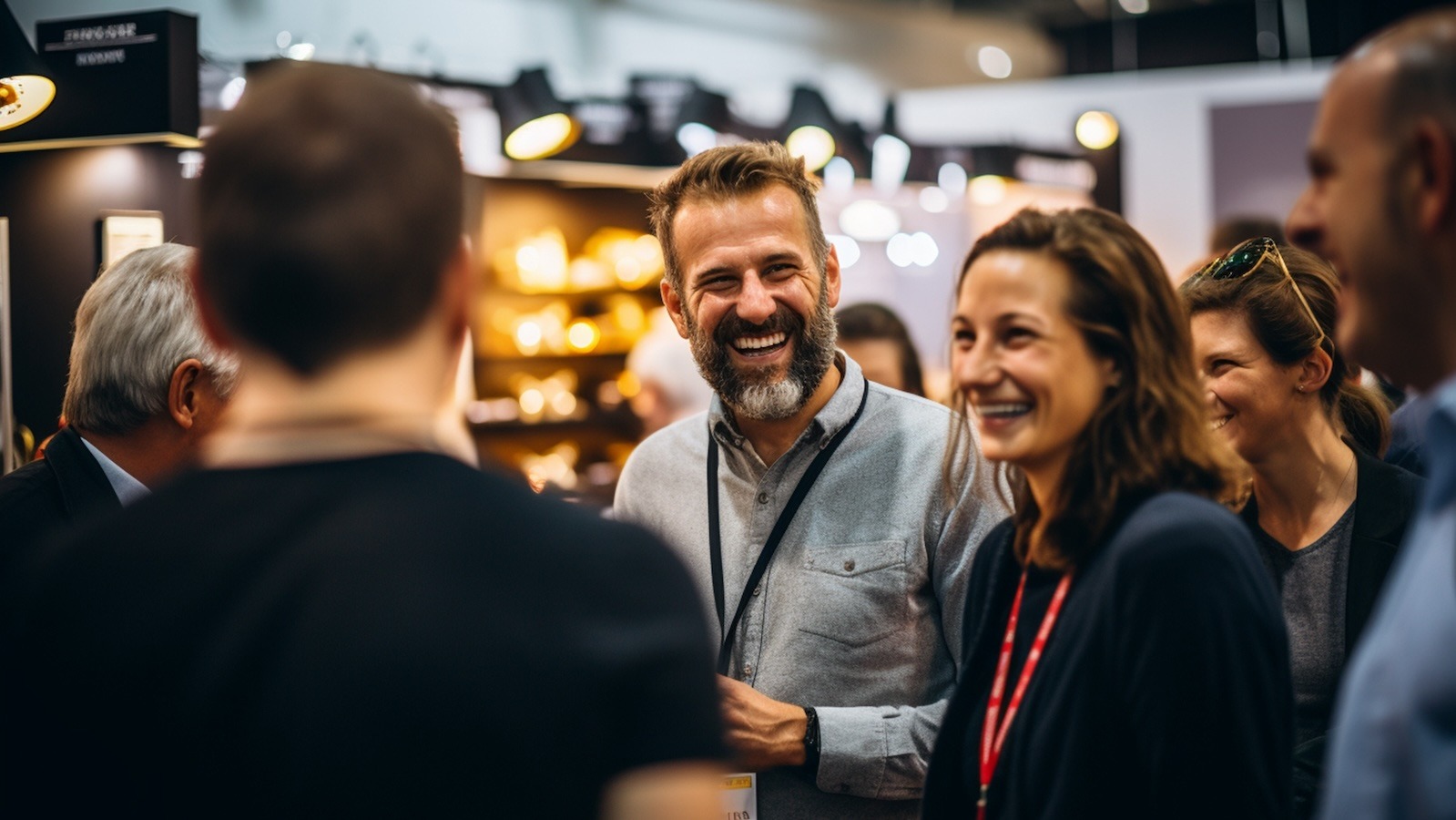
Many of our clients invest heavily in attending and exhibiting at industry events. When we’ve seen what their road trips entail, we enthusiastically encourage them to amortize their travel investment and seize the opportunity to create effective, legit thought leadership content.
Here’s how to turn a single event into unique content assets that pay dividends long after the trip is over.
Identify gaps in your current content library
Are you weak on top-of-funnel content like how-to articles or explainer videos? What about interactive quizzes or assessments?
Set a goal to fill obvious gaps, plus generate high-value longer-form content and thought leadership pieces where possible.
Formulate an on-site strategy
Scrutinize the event agenda and determine where opportunities lay:
- What topics are workshops covering?
- Are there any high-profile presenters?
- Who’s the keynote speaker?
- Are there fellow exhibitors that target the same audience without being competitors?
- Are any current clients attending? What about companies on your most-wanted list?
Map out the who, where and what
Brief your event attendees on the goals for capturing content:
- What topics or themes should they be looking for?
- What questions do you want answered?
- What do you want to come home with — interviews, video content, blog topics or something else?
Be mindful that your team members likely have their own responsibilities (especially your sales team), so consider assigning a content capture role if you have the luxury of sending a dedicated person. Choose wisely, as they should be capable of spotting opportunities and translating conversations into content insights.
Schedule what you can in advance
Plan ahead to grab key opportunities; for example, assign someone to record short “walkaway” videos after educational sessions — 60-second snippets using a smartphone camera that recap key takeaways while they’re still fresh. Better yet, ask fellow session attendees before the session starts if they’re willing to share one thing they learned.
Same for event speakers. Reach out when the agenda is released and ask for 5-10 minutes of their time in return for promoting their session on your company’s social channels.
Grab ad hoc opportunities
People love to share their opinion — it’s human nature. Stroke the egos of booth visitors by capturing those opinions:
- Short-form videos asking attendees for their take on an industry hot topic
- LinkedIn Live coverage that positions your brand as present and plugged in
Don’t forget b-roll you can weave into future videos.
Consider the pipeline angle
Attendee events are often where your best in-person prospect and customer conversations happen — and those conversations are content seeds. A casual lunch conversation about a customer’s challenge can become a case story. A recurring question you heard three times in one day is a content gap waiting to be filled.
Max out post-event content creation
You’re back home where goal #1 is to repurpose, repurpose, repurpose:
- “What we heard at [event]: 5 trends shaping [your industry]”
- A team debrief formatted as a podcast or LinkedIn Live
- Hot take posts where your POV diverges from conventional wisdom
- An opinion piece: “Everyone at [event] is talking about X — here’s why we think they’re missing Y”
- Sales enablement: what objections, questions or themes came up in customer conversations? Share them with sales and help formulate powerful responses
Pro tip: Never skip a structured debrief within 48 hours of returning. Insights can quickly evaporate, so capturing what your team heard, observed and thinks will provide the source material for months of content assets.
Every event has a hard cost and a hidden upside. The hard cost is what you already paid. The upside is everything you bring home — and how far you can stretch it.
Q&A HIGHLIGHTS
Q. Shouldn’t we be hosting the event to do all this?
A. When you host, your content is coverage — “here’s what happened at our event.” When you attend, your content is commentary — “here’s what we observed, and here’s what we think about it.” Commentary is actually a stronger thought leadership play. It’s opinionated, it’s timely and it doesn’t require you to own the stage.
Q. What’s the biggest mistake companies make with event content?
A. Treating content capture as an afterthought rather than part of the event strategy itself. If your team isn’t briefed before they leave, you’ll come home with great memories and half-formed ideas that never make it to the page.
Q. Do we need a big team or budget to pull this off?
A. Not at all — even a solo attendee with a smartphone and a notes app can come home with usable content. The key is going in with a plan rather than hoping inspiration strikes on the show floor.
Q. How soon after the event should we start publishing?
A. Lead with your most time-sensitive content — reactions, hot takes and trend roundups — while the conversation is still active on LinkedIn and in your industry’s feeds. Longer-form content like case stories or white papers can follow over the next 30–60 days.