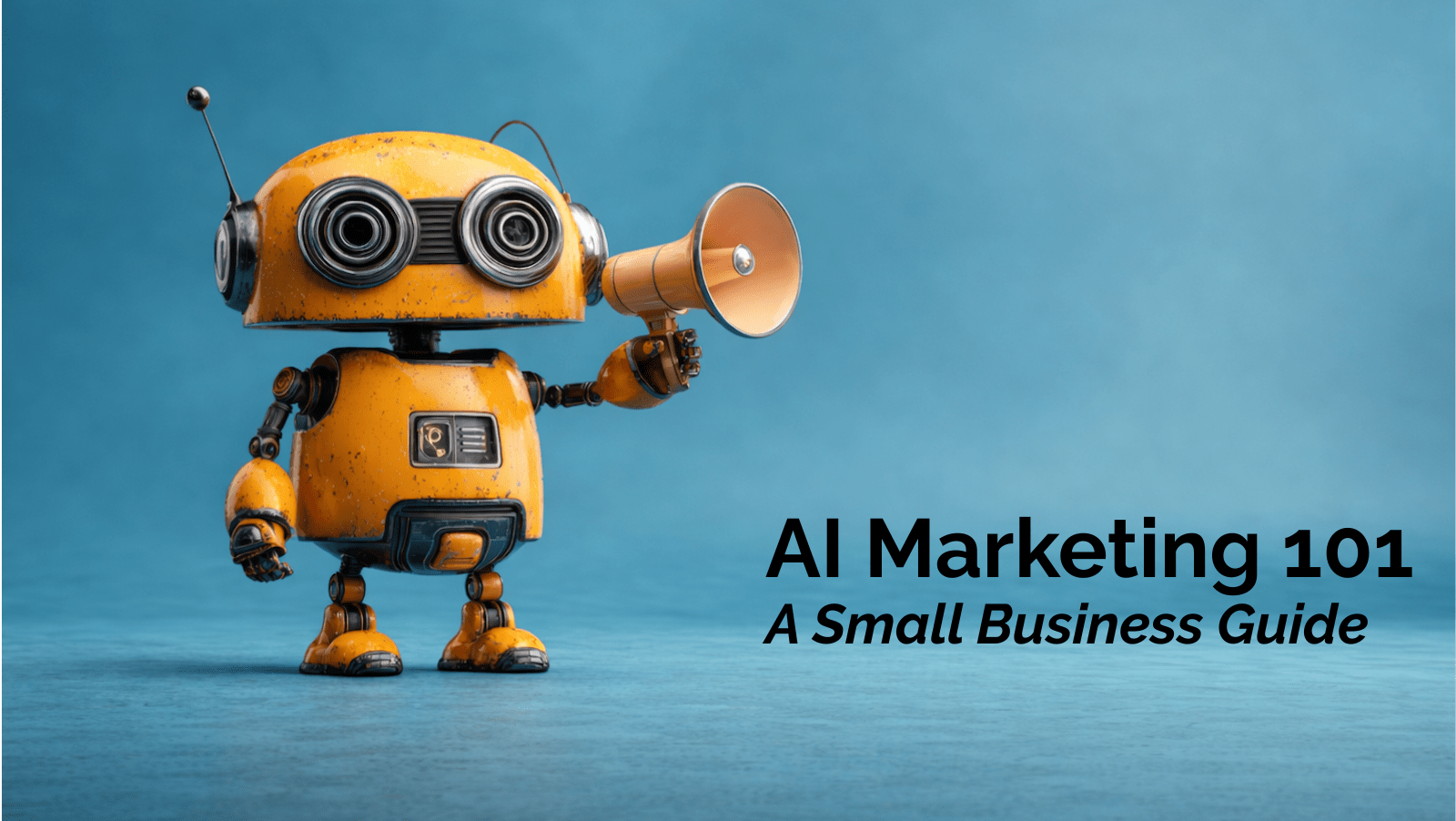
Part 3 in our AI Marketing 101 for Small Business series. Check out Part 1 and Part 2.
From brainstorming headlines to synthesizing research data, AI can help write your marketing content. But it can’t define who you are.
The difference between forgettable content and content that converts is knowing exactly who you are and what you stand for before you start creating. As more small businesses adopt AI tools for content creation, it’s critical to define your brand voice first.
From mechanics to tone to language, your brand voice should be what every customer and prospect hears, reads or sees through every interaction. Here’s how to capture your brand voice in a way that’s clear and ready to guide both your team and your AI tools.
Setting the foundation
To get started, your brand voice needs foundational elements that explain why you exist and what makes you different. Establishing these guidelines will keep your messaging stay focused and authentic.
Start with your why. Why does your company exist beyond making a profit? Pinpoint the motivation behind your efforts and what challenges you hope to solve.
Clarify your brand promise. What specific, measurable value do you deliver to customers? What pain points do you solve? Remember, vague promises don’t build trust.
Communicate what sets you apart. What makes customers choose you over competitors? Your differentiators are key selling points. Make sure they’re front and center in your messaging, and amplified by your brand voice.
Map your market position. Are you a brand new startup or an established leader? Your voice should reflect your place in the landscape, so identify your niche and stay true to it.
Finding your voice
If your brand was a person, what three adjectives would describe them? Are they bold and witty? Trustworthy and knowledgeable? Maybe they’re innovative and energetic? Most importantly, would your customers agree?
Your brand voice is the distinct personality that makes your business recognizable across every customer touchpoint. It’s how you show up in an email subject line, a product description or a customer service email. Without intentional definition, your messaging becomes inconsistent. For example, depending on who’s writing it, it can be smart and snarky one day and boring and formal the next. And when you introduce AI into the mix without clear guidelines, you could end up with generic content that sounds hot off the presses of ChatGPT.
Many iconic brands have a memorable personality you can sum up quickly in their tagline. For example:
- Nike – Just Do It
- McDonald’s – I’m Lovin’ It
- Toyota – Let’s Go Places
Think of a tagline as your brand’s core character that carries through every piece of communication. So even without seeing the logo, customers and prospect will recognize you instantly.
Documenting the details
Personality goes a long way, but it’s not everything. You also need concreate rules about how you communicate. A style guide is an invaluable reference document that helps ensure your entire team — from writers to designers to salespeople — are on the same page. If someone has a question about tone or style, point them to your style guide first.
Start by documenting your tone across different contexts. Consider the following:
- Are you more casual on social media but professional in white papers?
- Do you use humor in email subject lines but keep blog posts straightforward?
- Are your social posts short and sweet on Facebook but long and informational on LinkedIn?
Map out these variations so your voice stays consistent and cohesive while adapting appropriately to each platform.
Next, establish your vocabulary and grammar preferences. For example:
- Do you write out numbers under ten or use numerals?
- How do you format dates and times?
- What industry-specific terms do you capitalize?
- Do you use the Oxford comma? (We hope not!)
Your brand voice will evolve as your business grows — and so will your brand guidelines. As you launch new campaigns or expand into new markets or onboard team members, make tweaks and adjustments as needed.
Brand voice and brand strategy go hand in hand
When your team (or your AI) understands not just how to sound, but what you stand for, every piece of content becomes more meaningful. That’s one huge way to stand out in the AI Sea of Sameness.